

Cities across India are generating more waste than ever, businesses are racing to meet sustainability commitments, and households want to do the right thing but often have no idea where their trash actually ends up.
Across this entire chain, our waste systems are struggling to keep up. Most discarded materials still land in overflowing dumpsites, recycling is fragmented and opaque, and circular economy solutions remain out of reach for many.
To change this, Rahul Nainani (Co-founder & CEO) and Gurashish Singh Sahni (Co-founder & COO) started ReCircle with a mission as ambitious as it is essential: divert waste away from landfills, bring it back into the economy, and make circularity accessible to every business, community, and individual.
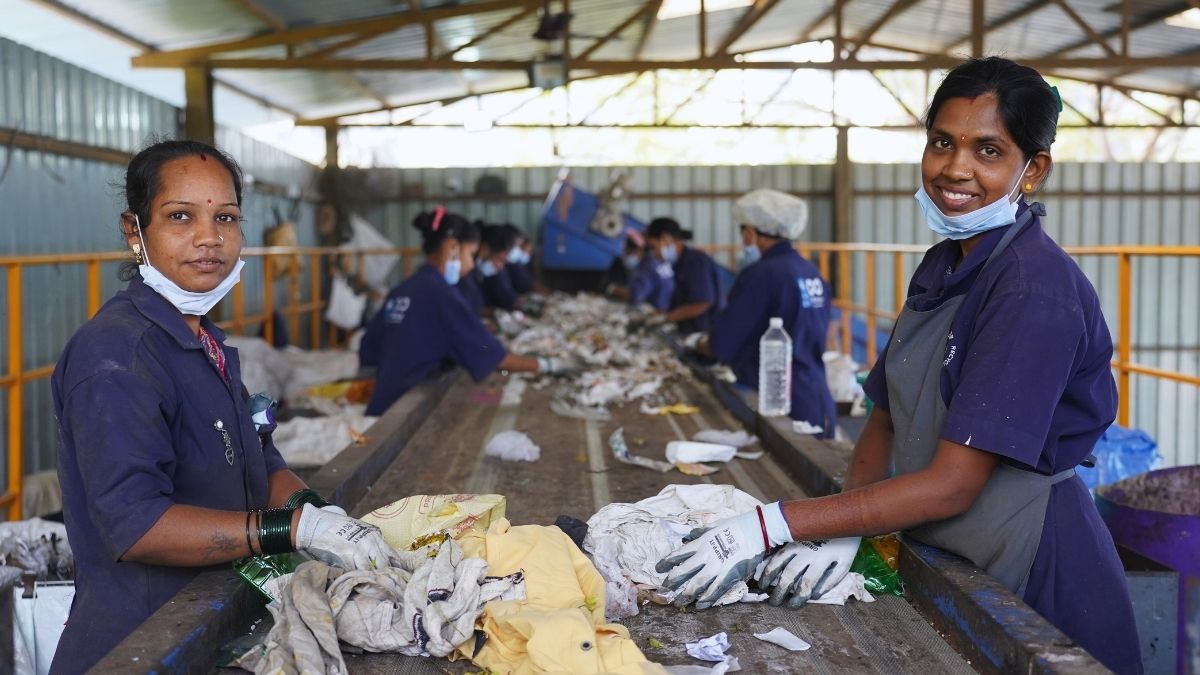
At the heart of their work is a fully integrated waste management ecosystem. ReCircle collects, segregates, and processes everything from plastic, paper, and textiles to e-waste—turning what would have been discarded into valuable secondary raw materials. Their systems ensure traceability at every step, so materials don’t disappear into informal channels but are ethically recycled, upcycled, or reused.
For businesses, ReCircle is transforming how sustainability goals are met. Their waste management programs give organizations visibility into their supply chains, while their Plastic Neutral Program and ethically recycled plastic (ERP) help brands measure, reduce, and offset their plastic footprint. Even textile waste gets a structured, traceable journey, allowing garments to be repurposed, upcycled, or recycled instead of ending up in landfills.
For individuals and communities, the model is just as empowering. ReCircle collects dry waste from households, societies, and offices, routing everything to their Material Recovery Facility where it’s sorted and processed responsibly. Through collection drives and community engagement initiatives, they make it possible for people to actively participate in a circular economy, one bag of dry waste at a time.
ReCircle’s approach is all about building systems that are reliable, transparent, and genuinely sustainable. Their work has already diverted significant volumes of waste from landfills, strengthened recycling supply chains, and helped brands move toward regulatory compliance and authentic environmental action.
The impact is tangible. More materials stay in circulation, fewer resources are extracted, and communities gain a clear, practical pathway to sustainability. At the same time, businesses reduce their environmental footprint while contributing to a cleaner, more responsible economy.
At the end of the day, ReCircle is shaping a future where waste isn’t the end of a lifecycle but the beginning of a new one. Every responsibly processed bottle, bag, or garment is proof that circularity can be practical, scalable, and impactful. And that India’s sustainability story is only just getting started.
Want to explore more about ReCircle?

Newsletter
Register your interest to attend DCIW by signing up for our mailing list to get updates and event invitations!